Step 1
Define The Commercial Use Case First
A commercial battery energy storage system can support several business goals, but each goal changes the sizing and equipment discussion. Peak shaving, backup power and solar self-consumption should not be quoted with the same assumptions.
- Peak shaving and demand-charge management
- PV self-consumption for factories, warehouses or commercial buildings
- Backup for critical loads and operating continuity
- Energy management for sites with variable load or expansion plans
Step 2
Compare System Format, Not Only Capacity
A 100kWh target and a 200kWh target can be supplied in different formats depending on site conditions. The format affects installation, thermal management, safety design, service access and future expansion.
- Rack battery systems for indoor or controlled equipment rooms
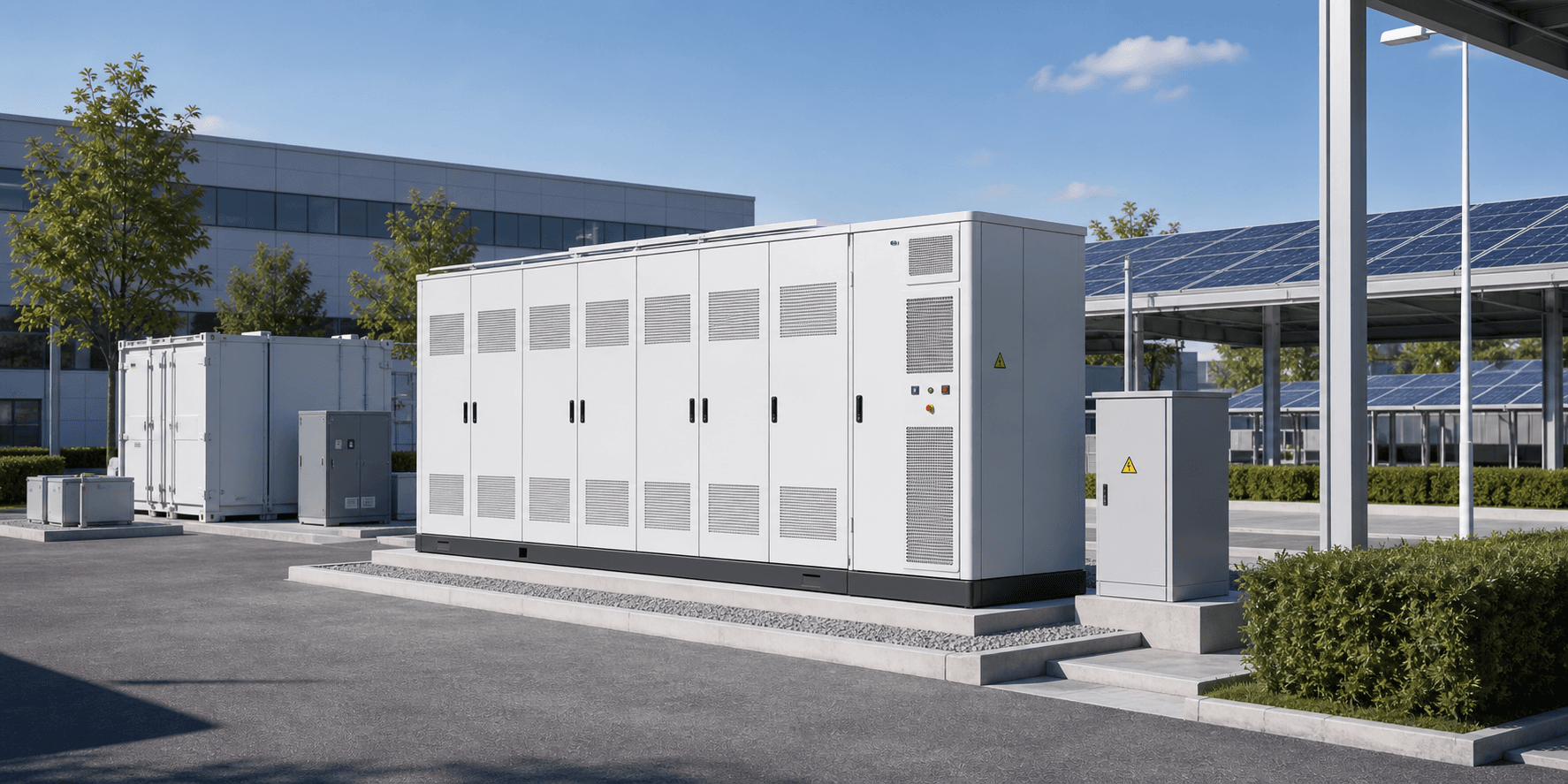
- Outdoor cabinet ESS for packaged C&I deployment
- Containerized ESS for larger project-level storage capacity
- Wall or low-voltage battery formats for smaller commercial or mixed residential use
Step 3
Check Power, Energy And Duration Together
Battery energy capacity in kWh is only one part of the decision. Buyers should also compare power output, charge and discharge duration, cycle requirements and the load profile the system is expected to support.
- Peak power requirement in kW
- Required energy capacity in kWh
- Backup or discharge duration target
- Expected daily cycling and operating schedule
- PV generation profile if solar is included
Step 4
Confirm Inverter And Battery Compatibility
Commercial BESS selection usually involves a battery platform, PCS or hybrid inverter, protection equipment and monitoring. The quotation should confirm the voltage platform, communication protocol and integration path before final model selection.
- Low-voltage or high-voltage battery platform
- Hybrid inverter or PCS selection direction
- CAN, RS485 or monitoring communication requirements
- Grid connection, generator input or backup requirements
Step 5
Ask For A Document Pack That Matches The Model
Commercial buyers often need datasheets, certification references, manuals, warranty terms and shipping documents. These should be requested for the selected model and destination market, not as a generic marketing file.
- Datasheet and model-level specifications
- Applicable compliance references by selected product
- Installation, operation or maintenance document availability
- Warranty, delivery and after-sales support terms