Product Category
EV Chargers
A DC charging category spanning compact commercial chargers, mobile charging units and ultra-fast infrastructure-oriented platforms.
Product Overview
EV Chargers for project requirements
Compare charging equipment by site role, power class, installation format and operating requirements.
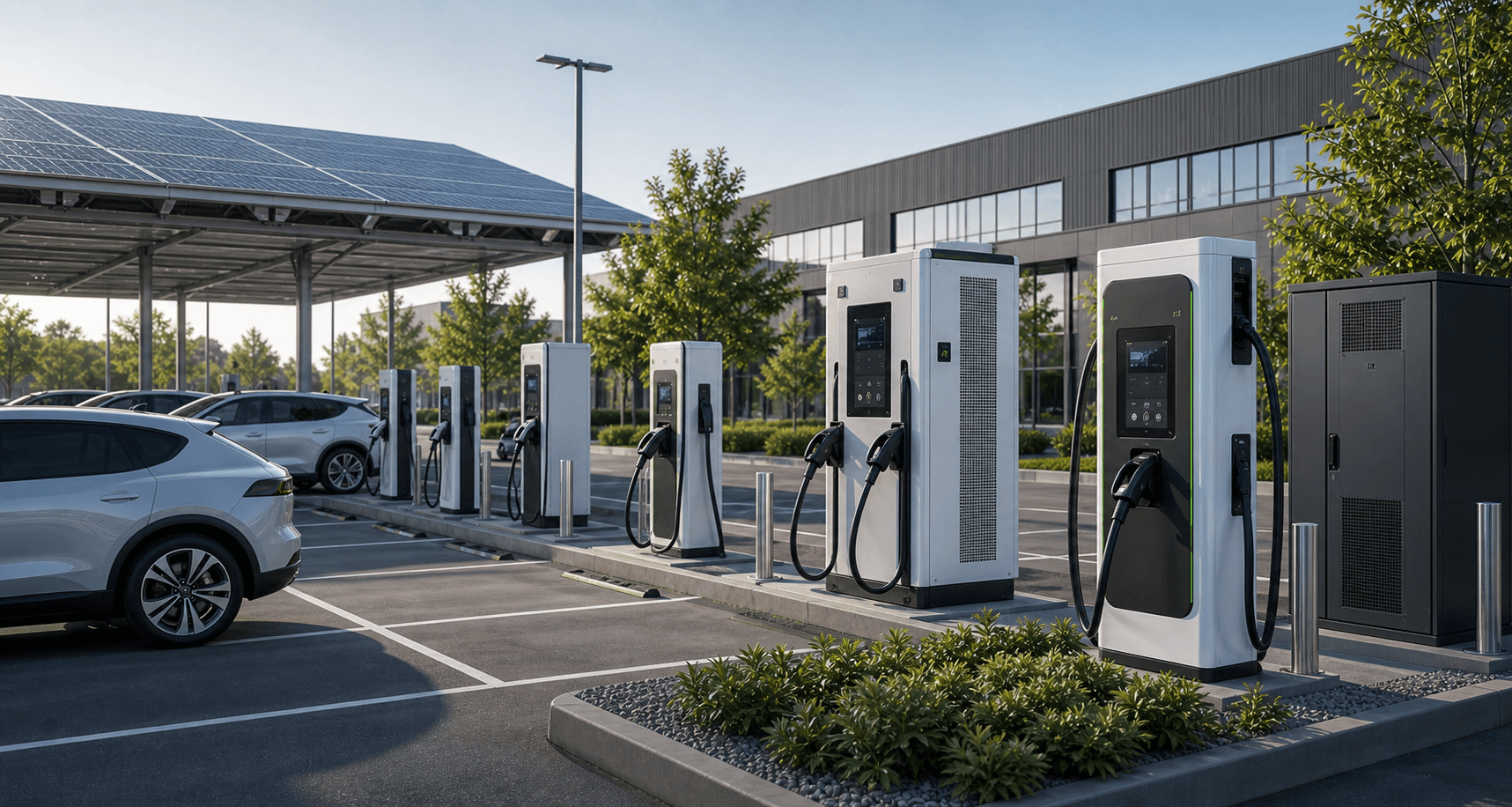
EV Chargers
EV Chargers
Commercial and high-power DC charging systems for parking, fleet and infrastructure deployment.
Power Classes
Mobile, commercial and ultra-fast DC charging ranges
Deployment Formats
Wall-mounted, pedestal and mobile charging options
Platform Role
Retail, fleet, parking and charging-site infrastructure
System Logic
OCPP, DLB and scalable site planning context
Commercial Charging
Focuses on parking, property and public-site charging where throughput, footprint and charger networking matter more than one isolated device spec.
Fleet and Service Charging
Mobile DC charging and service deployment options for operational charging requirements.
High-Power Infrastructure
Separates ultra-fast charging discussions for operators who need power class, site planning and long-term station scaling logic.
Applications
Application scopes served by this product category.
Commercial parking deployment
Suitable for retail or property sites that need a practical charging offer with controllable footprint and operation logic.
Fleet and service charging
Useful for logistics, service teams or managed fleets where uptime, charging speed and repeatable deployment matter.
Mobile charging support
A good fit for temporary charging, maintenance support or scenarios where fixed-site infrastructure is not always the first step.
High-power charging sites
Suitable for operators evaluating ultra-fast charging capacity, multi-gun configuration and future site scaling.
Selection Criteria
Technical and commercial factors for the applicable product configuration.
Charging application
Commercial parking, fleet, mobile service and high-power charging sites require different equipment formats and power planning.
Power class and turnaround
Charging speed, vehicle type and site behavior determine whether compact, mobile or ultra-fast DC equipment is suitable.
Networking and site control
Commercial applications define OCPP, DLB and scalable station-management requirements.
Installation format
Wall-mounted, pedestal and mobile deployment choices determine the applicable equipment format.
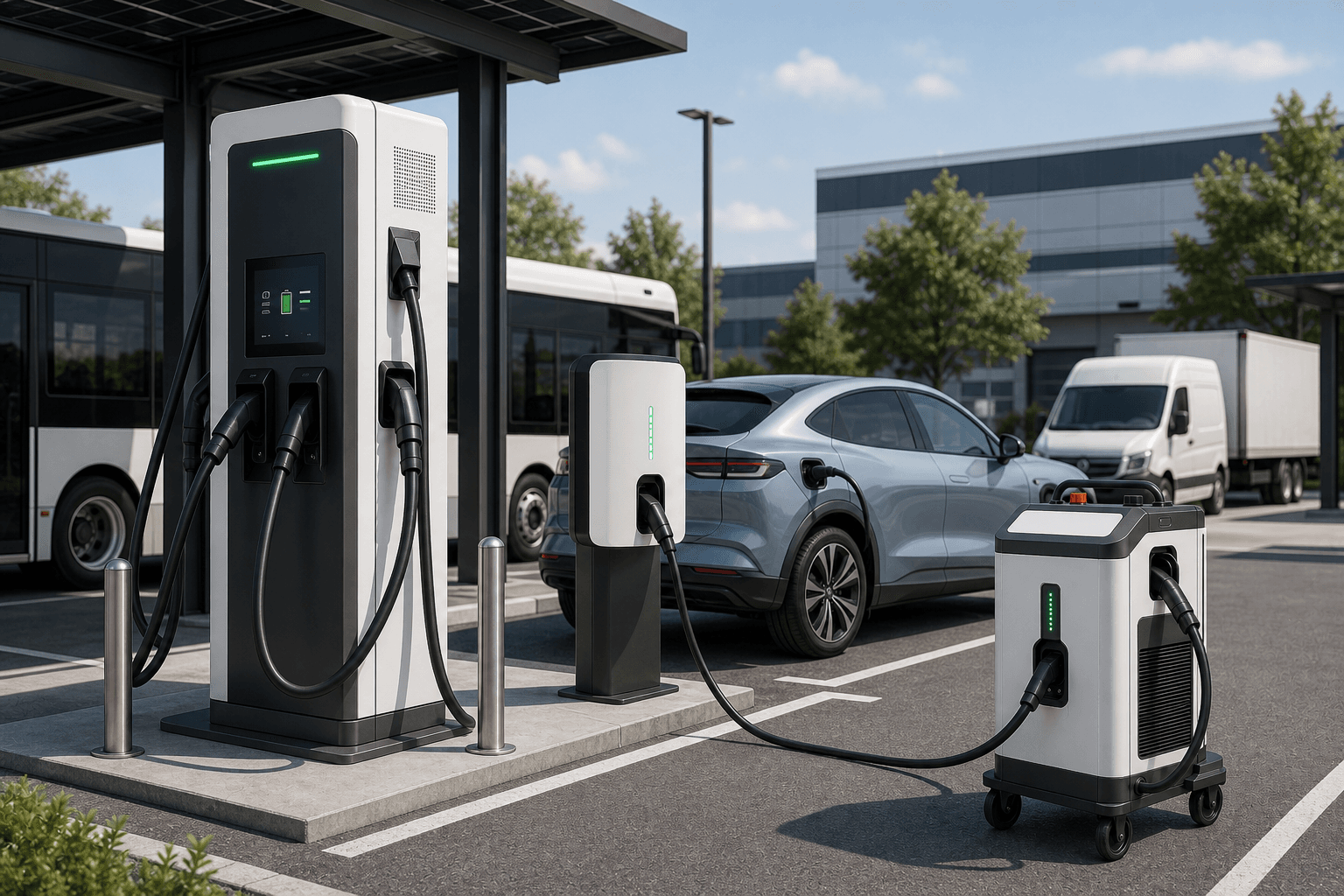
Charging Selection
Charging equipment selected by site role and power class
Compare infrastructure-grade stations, compact commercial charging and mobile support units more directly.
Selection Considerations
Select equipment according to system requirements
Application, power class, voltage platform and operating mode define the applicable product family.
Selection Matrix
Match equipment to your application
Application requirements and technical inputs determine the model-level quotation scope.
Application
Recommended Direction
Confirm Before Quote
Application
Temporary or service charging
Recommended Direction
TYPE 2 Mobile DC 7kW / 20kW family
Confirm Before Quote
Available AC source, connector standard and portability requirement
Application
Commercial parking or fleet site
Recommended Direction
DC charging family matched to turnover and station layout
Confirm Before Quote
Vehicle mix, daily charging demand and communication protocol
Application
High-throughput charging infrastructure
Recommended Direction
GC 240 / 320 / 360kW series
Confirm Before Quote
Grid input capacity, connector outputs, OCPP scope and expansion plan
Category Information Scope
Category pages guide selection, then quotation confirms the exact model
This category page helps buyers compare application fit and equipment direction. Final model, brand scope, documents and delivery terms are confirmed after project inputs are reviewed.
Featured Series
Representative product series and available technical specifications for this category.
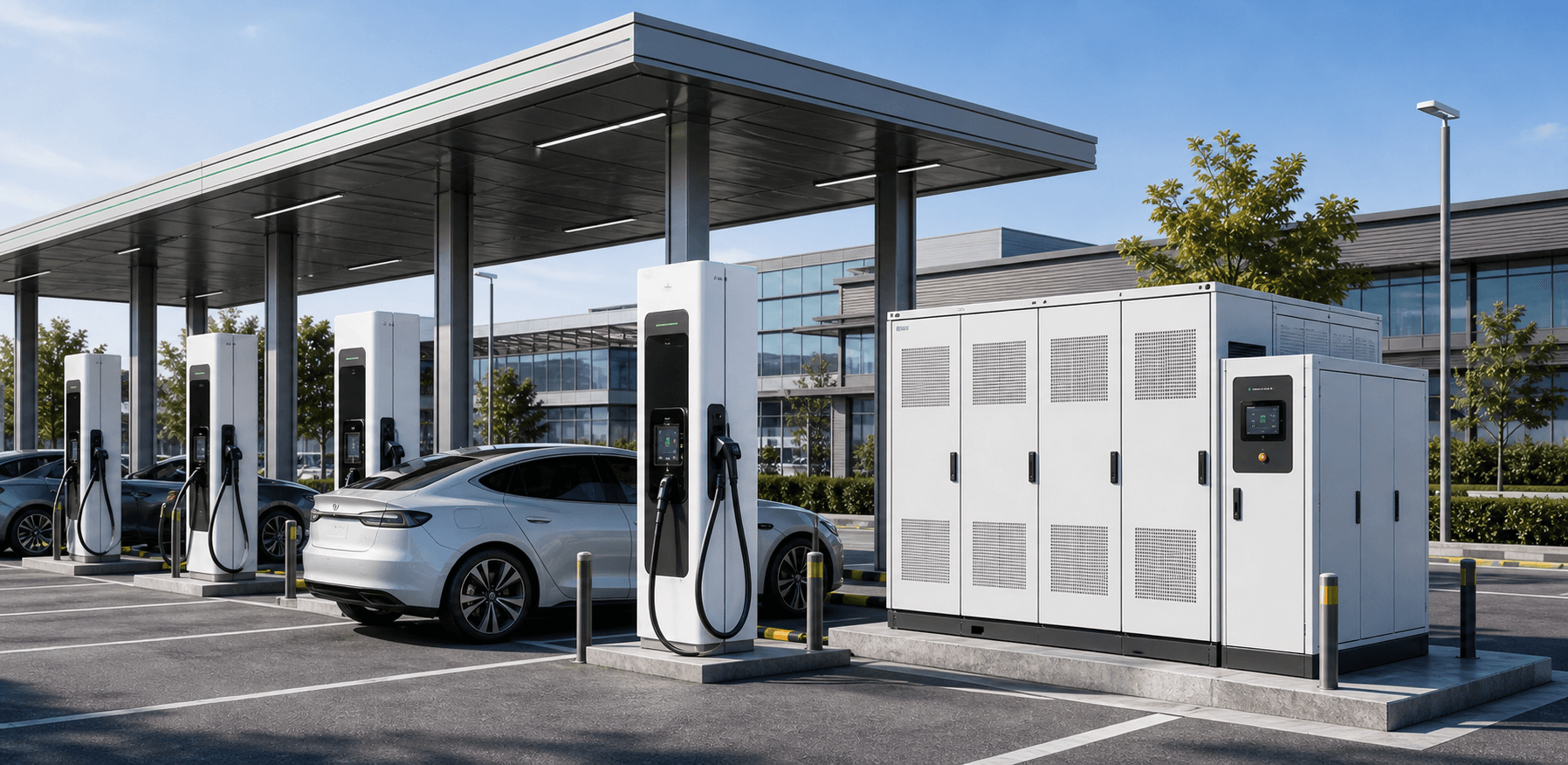
Ultra-Fast DC
HC 240-360kW Series
A high-power DC fast charging family for commercial charging sites and infrastructure projects where throughput, multi-gun logic and site scalability matter most.
- Built for high-throughput commercial charging scenarios
- Supports fast-charging site positioning rather than small standalone use
- Fits operator, public charging and large parking deployment conversations
Power Range
240kW to 360kW
Series Models
GC240 / GC320 / GC360
Charging Outputs
Up to 4 guns
Single-Gun Peak
Up to 320kW
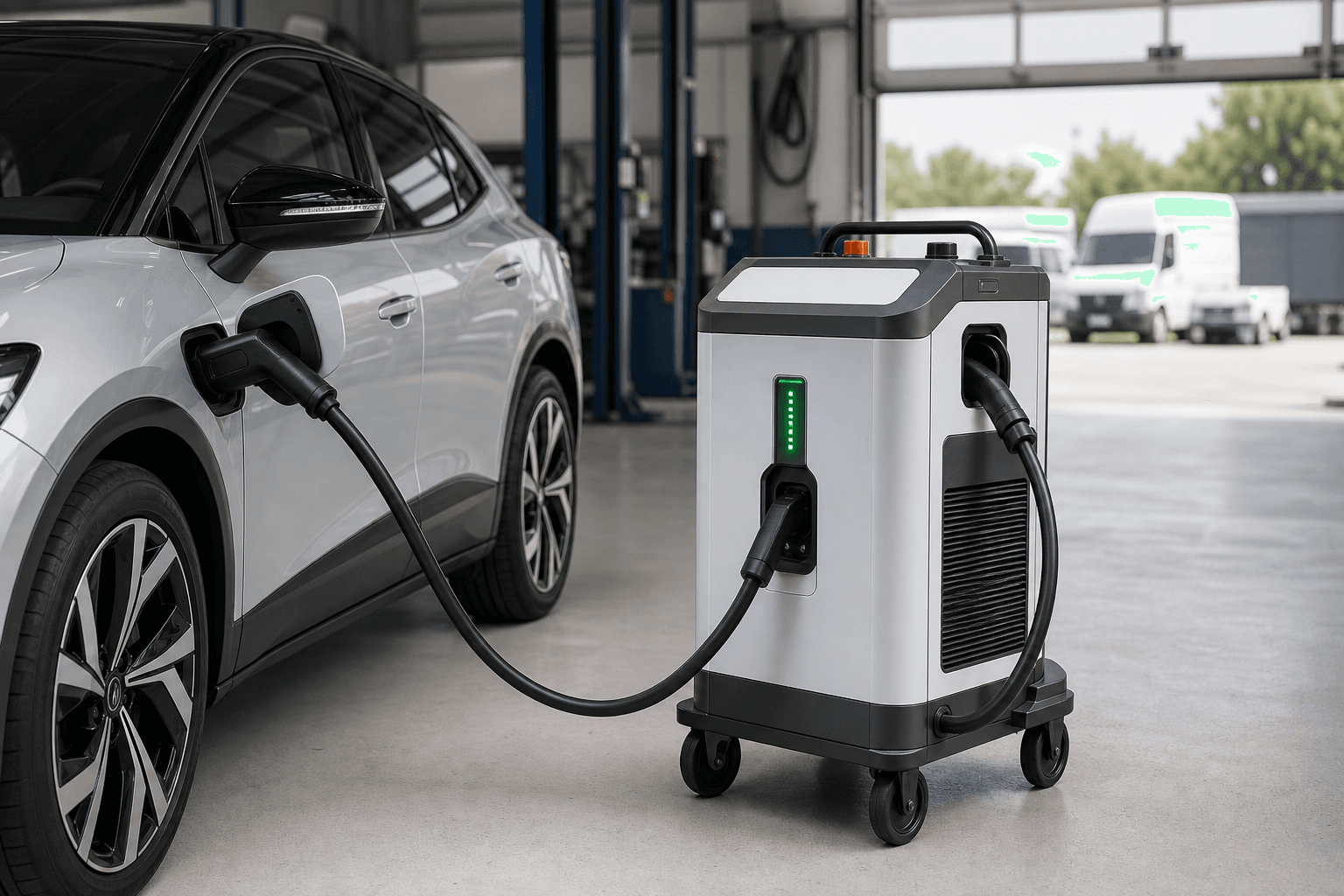
Mobile DC
TYPE 2 Mobile DC Series
A portable mobile DC charging family designed for Type 2 AC dual-input access and special deployment environments that need flexible charging support.
- Supports Type 2 AC dual input from public AC charging-post access
- Portable charger family for flexible and special deployment environments
- Covers 7kW and 20kW power options
Power Coverage
7kW and 20kW
Output Voltage
200-750V, with 200-1000V optional
Input Logic
Type 2 AC dual input
Protection
IP43
Selection Criteria
Charging Configuration Criteria
Site type, power class and operating model define the applicable charging equipment family.
Site role
Retail parking, fleet yards, service support and charging operators require different equipment formats.
Power class
Compact commercial DC charging and ultra-fast infrastructure products address different throughput requirements.
Networking and deployment
OCPP, DLB, installation format and expansion requirements complete the charging-site scope.
Commercial Comparison Notes
Commercial and technical differences across applicable product configurations.
Mobile and fixed charging serve different needs
Mobile DC chargers solve service flexibility, while station products solve site throughput and infrastructure planning.
Power class should guide the comparison
Compact and ultra-fast chargers belong to very different buying decisions, so the scale difference should stay clear.
Charging should connect with solar + storage
Charging infrastructure becomes more compelling when connected to broader energy and site-management use cases.
For Quotation
Information to include in your inquiry
Rongkai confirms product scope, supporting documents and delivery requirements against the submitted project inputs.
- Destination market and charging standard
- Vehicle type, daily demand and required charging time
- Available site power and installation layout
- Connector, OCPP, DLB and payment/networking requirements
- Any solar, storage or future expansion requirement
Request a Product Configuration
Submit project type, power range and installation requirements for product, document and quotation confirmation.